How Cold Emails Landed Me $100K in VC Funding and a U.S. Visa for My Startup
How I Moved to the U.S. (A Practical Guide for Bio Startup Founders)
Carmen Kivisild
Author
Hello, fellow bio founder. This is my story, written for you. Many have asked me: Why the heck did you move to the U.S.? And the bigger question: How? Don’t worry — I’ll tell you. This is not legal advice, and you shouldn’t make decisions based solely on what I did. But if you’ve been thinking about taking the leap — moving your company, your family, your whole life. I hope this gives you an honest look into how I did it… and the confidence to know you can too.
Here’s what we’ll cover in this piece:
Why I decided to move my startup and family from Estonia to the U.S.
How I raised my first U.S. funding ($100K) from a cold email
How we set up a U.S. company with a simple Delaware flip
How Altitude Lab made the physical move possible and supported us on the ground
How I got my O‑1 visa in just over eight weeks
Why Salt Lake City became our new home
Everything You Need to Know About My Life Before Elnora
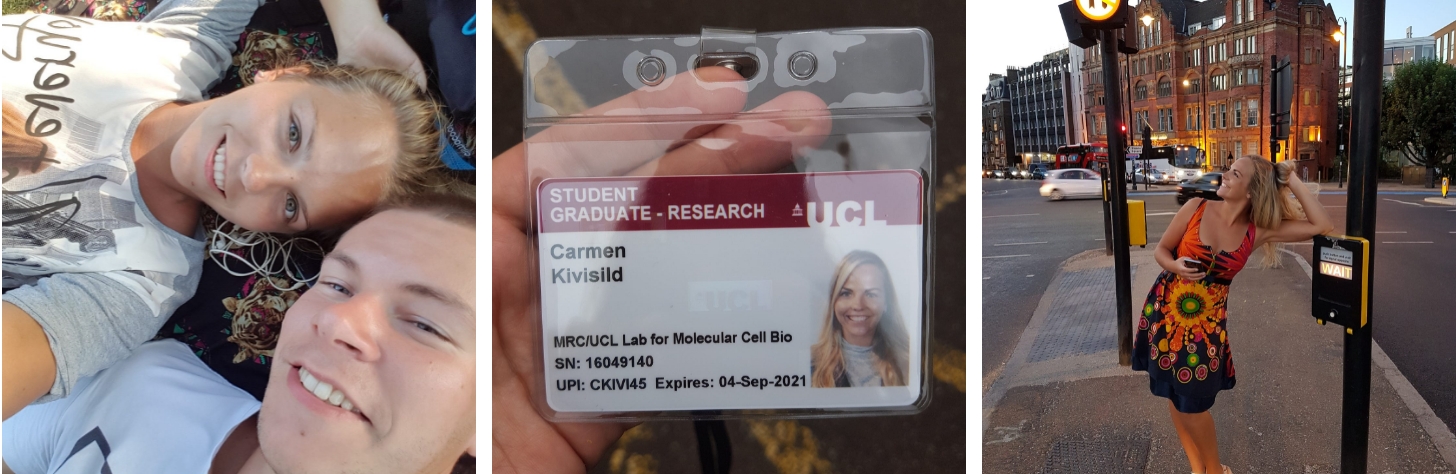
A bit of background so you know where I’m coming from. Currently I’m 34 years old (well, technically 33 — my birthday’s in August) and originally from Estonia. I’m a scientist. I started my career here, did my bachelor’s and master’s in Estonia, then moved to London, where I lived for seven years. I did my PhD at UCL and my postdoc at KCL. During my PhD I spent two summers in the U.S. doing internships: one at UCSF and one at Tufts Medical School in Boston. I met my husband, Risto, during my bachelor studies, and we’ve been together ever since. He’s also a scientist. I’m telling you this, so you understand two important things: I’ve moved internationally before (that time without kids), and I have a partner who moves with me. We left London mostly because we had our second child and needed more support. Both of our families are incredible, so it made total sense to move back to Estonia and lean on that network while I focused on building. We moved back in July 2023, just as our older one was turning three (our birthdays are a week apart!), and our baby was four months old.
How I Realized I Needed to Move to the U.S.
I met my co-founder, Karl-Oskar, on LinkedIn in November 2023, and we officially started working together in January 2024. We did everything you're supposed to do: registered the company, hired (and fired) our first team members, got into accelerator programs, grabbed all the free AI credits we could find, talked to users and investors. But then I realized, we are not going to raise the money we need from Europe and we need to go to U.S.
Although in hindsight it made total sense from a business perspective—acquiring first clients, being exposed to incredible people—and it has totally paid off, at the time, the decision was mostly driven by investors. Don't get me wrong, I love Estonia. My family, my friends are all here and it's an incredible place where to build and all the reasons why I moved back were still valid, but…I had spoken to 50+ investors in Europe, and the pattern was super clear: they didn't really get it.
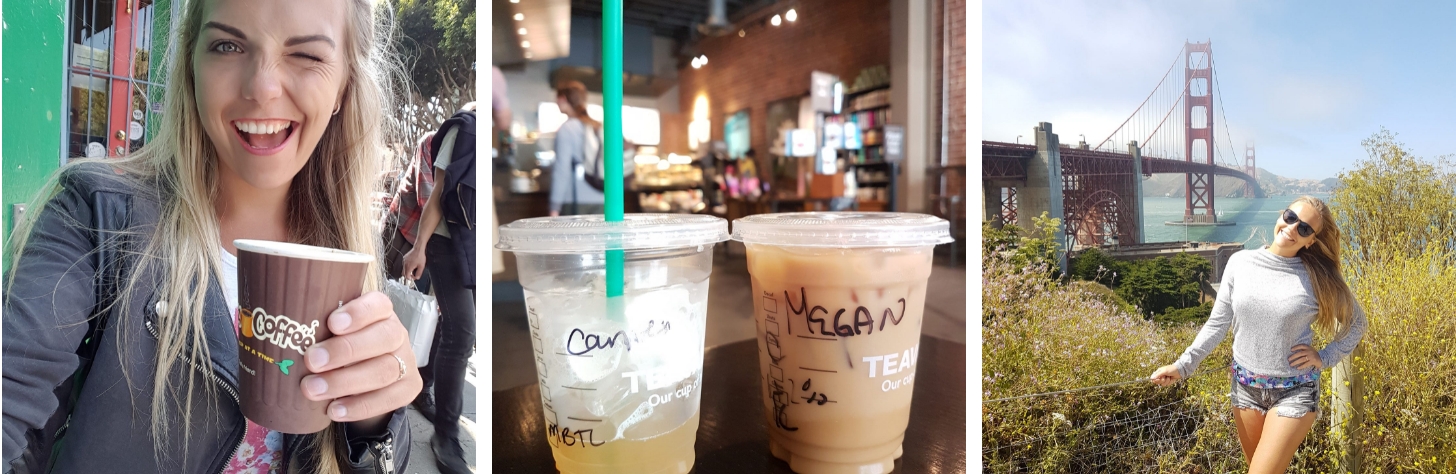
During my PhD at UCL I spent two summers in U.S., so I already had that American dream from these experiences. I had felt the difference in attitude, the level of great talent and peoples' willingness to dream along with you. Europeans are very practical, they believe what they see in front of them. However, Americans are dreamers, just like me. In UK most of the times I had to hide who I really am, as it was always too much, too energetic, too crazy. In the U.S. I had an opportunity to be myself and people actually liked it.
I make a lot of decisions based on my gut feeling and the data that supports it. Often the answer just kind of appears to me. But only after I've talked about it. Like really talked about it. I'm an auditory learner, so I need to say things out loud, many many many times. Usually, it's my mum or my husband who listens to me go on and on, but lately I've also been bouncing ideas off other founders and working with coaches to get even more perspectives. And then, somewhere between the tenth and twentieth time of talking about something, the right answer just comes to me. That's exactly what happened with the U.S. decision. It came from the combination of talking with many Europe-based investors and getting the same feedback repeatedly, talking with other founders who had experience from both sides of the ocean, trusting my gut feeling, and my previous exposure to Americans.
Fun fact: just a month after moving back to Estonia, I told my husband I could definitely do it again—pack up and live somewhere else for a few years before we 'settle down.' Looking back, I think I had unconsciously made the decision to move to the US months before I consciously realized it myself.
How I Got My First U.S. VC Money (From a Cold Email!)
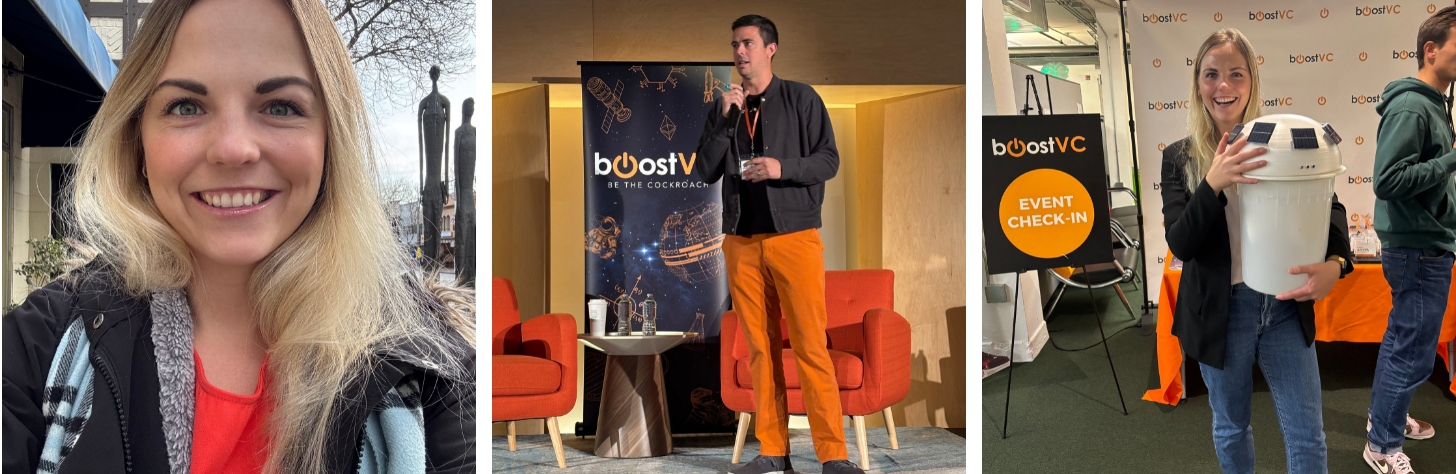
Then one day, while I was still in Estonia and scrolling on LinkedIn, I saw someone mention Boost VC (and now I hope I can be that someone for someone else by posting about them). Their profile and the people behind it promised one thing: we invest early, we love being the first check in, we believe in ideas and people. And that’s exactly what we had.
At that point, Elnora was barely past the idea stage. We had made little real progress and have since pivoted about a hundred times. The idea I pitched to Boost is not what Elnora is today and definitely not what it’ll be in a few years. But that’s the nature of startups, especially at the very beginning. And it’s something many European investors just don’t get. At pre-seed, even seed stage, what you’re building matters way less than why you’re building it. So in my mind, Boost was perfect: U.S.-based, open to crazy ideas and oh man, I’ve been called crazy more times than I can count.
I filled out the application on their website and to my total surprise, the next day I got a response. They said they were interested in what we were building and would love to hear more. I booked a call with Gus. That first call was unlike anything I’d experienced with European investors. Gus got it. He got me. The questions he asked were 180 degrees different. In Europe, the first (and often only) question was: “What exactly is your product?” But with Gus, the conversation was: “What’s your vision? Why are you doing this? What motivates you? Tell me more about X, Y, Z.” The next step was a call with Mark, another wonderful (ex)Boostie (Mar has left Boost VC). Just two hours after that second call, I got an email from the Boost team saying: “We believe in you. Here’s $100K to build your dream.”
For the full transparency, here is the exact timeline: I submitted my application on June 17th, got Gus’s email the next day, had my first call with him on July 11th, second call with Mark on July 12th, just before midnight and next day, 2:30am on the 13th, I got the offer. I was in shock. My first-ever U.S.-based VC call via cold outreach and they wanted to invest $100K. This must be heaven.
How I Handled the Legal Stuff (Without Spending $10K+)
Gus said that while Boost VC is comfortable investing into an Estonian company, based on our conversation and my ambitions, he recommended setting up a U.S. entity and channeling all future investment into that. This made total sense - most of our clients are going to be US-based, and I knew we'd be raising larger rounds from US investors, not Europeans. But I needed to understand what this actually meant: the so-called Delaware flip.
Basically, you flip the structure of the company: you establish a US company that becomes the parent, and your original company becomes the subsidiary. Everyone told us it's a super complicated legal process that would cost at least $10K. But here's the thing - after talking to several lawyers (always book free intro calls first, if they charge for the first call, don't use them), Valentina and I realized it actually sounded... simple? Valentina was our general counsel at the time, and she still occasionally helps out with all things legal when needed.
I think the complexity would come if you are way more advanced than we were. We had only raised some angel money and gotten a couple of grants. Our cap table was and actually still is fairly simple and straightforward. You don't find crazy angels who have taken 30% and all rights, you don't find universities who always block every decision. Karl-Oskar and I had (and still have) full control over the company, so it was just a matter of execution. Since we got a clear step-by-step plan from those free calls, we decided to handle it ourselves. Establish the US company using Stripe Atlas, sell the Estonian company to the US parent using local notary services, transfer existing contracts, and done. Voilà.
And just like that, we had two companies: Elnora AI registered in Estonia and Elnora AI, Inc. registered in the US. As soon as that was done, I gave Boost the green light to wire the money. And they did. Instantly.
How I Found Salt Lake City to Call Home
Next, I started thinking seriously about physically moving to the US. I needed a place to live, more money for sure, and oh yeah... a visa. Again, it was the magic of social media that helped me.
I love Recursion. I honestly do, they are just amazing. And I've been such a big fan of Chris, the CEO and co-founder of Recursion, for so long. I follow him on LinkedIn, listen to his podcasts, read his articles, all of it. And somewhere he mentioned Altitude Lab, Recursion's startup program. Remember, I was super high from my previous success with Boost VC, so I was all in. I sent in an application via their website, again, a cold one. I didn't know anyone on the inside.
And on my birthday, August 8th, 2024, I got an email from Lauryn saying: "Congratulations, your application has been progressed to the interview stage." I was like... what is this magical place called the U.S.? I was mind-blown (and I still am!) by the amount of positive interest I got compared to Europe. I scheduled the interview ASAP and met the team. And again, I loved it. Lauryn, Kapil, and Chandana are just extremely smart, friendly, nice people—and they were genuinely interested in me, my vision, and how Elnora can grow with their support.
Then on September 7th, 2024, I met Chris. Online of course, because I was still in Estonia—but still... I MET MY IDOL! A person I've looked up to since day one of my own journey. Someone I admire tremendously. Just before the call, I thought I was going to throw up. I literally felt like... this is the moment in my founder career. I started the call and there he was. Friendly, regular, nice guy asking great questions. I felt so comfortable, so confident, so happy... and about 20 minutes into our call he said: "Look, Carmen, I like it, and let's do it. You are in. And I will give you the fellowship." I literally started jumping. I was beyond happy. I was just like... so happy, I can't even put it into words.
I stepped out of my bedroom—yep, that's where I had the call because it was late evening for me (the time difference between Estonia and Salt Lake City is like 10 hours!)—and my whole family was waiting behind the door. I looked at my husband and said, "We're moving to Salt Lake City." And he was like... "What?!"
He was surprised, of course. We had no idea what Chris would say. But he wasn't shocked. My husband is incredibly supportive. He moved to the UK with me before, then back to Estonia when we needed help with the kids. This wasn't our first big move. Still, I think deep down he had hoped that one day we'd just live a normal life in Estonia. Get stable 9-to-5 jobs. Buy a house, get a dog.
But I'm not ready for that. And he knows it. He's always known. We've dreamed together so many times. I've told him all the wild and amazing things I want to do in life. And while he gives me constructive feedback, he also supports me. A lot.
So when the official letter came on September 13th, 2024 from Chandana, saying welcome to Altitude Lab and congratulations on the fellowship, it hit us both. Oh wow. This is really happening. We're moving to the U.S.
Many founders have asked me if I would have still moved to the U.S. even if I didn't get the fellowship. What would have happened if Chandana and Chris had said no? Well, most likely I would not have moved physically. Because in order to move with the whole family including our 2-year-old son and 4-year-old daughter, I needed a bit more stability. I have always been so lucky to be surrounded by very supportive family and friends, but I didn't have this in the U.S., so I really needed someone to be on our side daily that is U.S.-based.
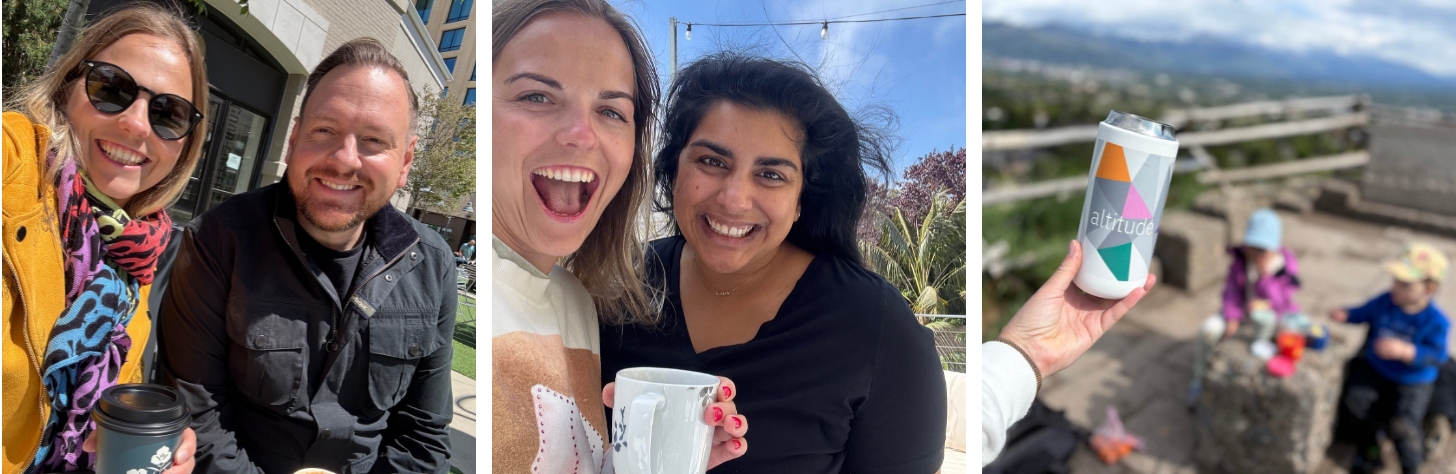
Altitude Lab has provided everything I have ever asked. Literally EVERYTHING. Chandana paid for my trip to Salt Lake City just to come for a week to check out the place, find schools for the children, check out potential places where to live. She told me how to get health insurance, which type of schools to check out, other founders from Altitude told me where to buy a car from, they literally dropped off some toys and a bike for the children, furniture for our empty apartment, etc. I told Lauryn that I need a monitor and keyboard, 10 minutes later it was on my table. We get free lunch every day! These are "small things" but make a huge difference when you start from zero. I have never heard such stories when people move to Silicon Valley. Quite the opposite, they usually live in someone’s basement. I am sure there are very supportive communities there as well, but that's in my opinion very unique to Salt Lake City. Chandana and Chris were both the final enablers who made the physical move possible for me.
How I Got My O-1 Visa (aka ‘Alien with Extraordinary Ability’)
Next step: figuring out how to get into the US legally. I reached out to my network and asked other founders about their visa journeys. Darya, one of our angel investors, connected me with Annika, who super kindly told me her story and recommended the O-1 visa.
Here’s the thing about O-1 visas. They’re for "aliens with extraordinary ability." Which, honestly, sounds like I need to be from another planet with superpowers. But it's actually perfect for founders who can prove they’re doing something special in their field. The only downside is that it’s pricey. You’re looking at a $16k-plus investment.
Since I already had experience extracting useful info from lawyers (remember the Delaware flip?), I repeated my strategy. I booked free intro calls with different immigration lawyers and asked straight up: "How does one get an O-1 visa?" Annika had recommended Plymouth Street, so I interviewed them plus like five others. After those calls, I realized this was definitely not a DIY situation anymore. I felt that Plymouth really understood my situation better than the others. Plus, they had Annika’s recommendation, a 99.9% success rate, and promised to get my visa within eight weeks. So I decided to go with them.
Plymouth handled the whole process super smoothly. Of course, they needed loads of documents, references, articles, press — all the usual proof. The O-1 is for people with “extraordinary ability,” so I had to prove I was that person. But with a science background, a top university diploma, a hot Estonian startup, VC funding, and a prestigious fellowship under my belt, it turned out to be enough. From me paying the bill to holding my passport with the visa: 8.5 weeks exactly. That speed alone made Plymouth worth every dollar.
Money, a physical place to set up an office, full support from Altitude Lab and Chris, a nice city to live in, a visa, and a supportive family - everything I dreamed of. I was ready to go. So, on the 12th of January, my family and I stepped onto the plane and flew to Salt Lake City.
You’re probably thinking: “Wait… what about your co-founder? The rest of the team? What happened next? I need more details.”
Don’t worry, the next post is already brewing.